
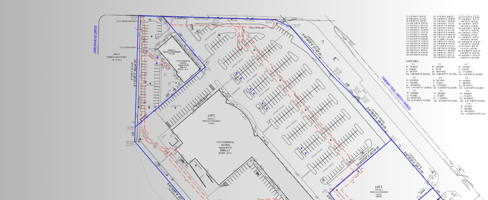
In the commercial real estate industry, precision is not just a luxury. It's a requirement. Whether...
Commercial Confidence: The Growing Importance of Data Accuracy in Commercial Real Estate Deals
Commercial Confidence: The Growing Importance of Data Accuracy in Commercial Real Estate Deals
2:32
Commercial real estate has always relied on information. Today, it relies on it more than ever.
As transactions become increasingly complex, stakeholders are being asked to make high-value decisions based on large volumes of property, legal, financial, and operational data. Investors evaluate risk across portfolios. Lenders scrutinize collateral. Attorneys reconcile legal rights with physical conditions on the ground. Title companies assess insurability and exposure.
In this environment, the quality of the underlying property data can directly influence deal certainty.
What was once viewed as a technical requirement has become a strategic component of due diligence.
The Shift from Documentation to Decision-Making
Historically, surveys, title documents, and site records were often viewed as transactional necessities. They were required to move a deal forward, but rarely viewed as a competitive advantage.
Today, that mindset is changing.
Commercial real estate professionals increasingly recognize that accurate property data supports better decisions long before closing. It influences acquisition strategy, development feasibility, financing terms, underwriting confidence, and long-term asset management.
The goal is no longer simply to document a property.
The goal is to create a reliable foundation for decision-making.
Why Accuracy Matters More Than Ever
Modern commercial projects involve a growing number of stakeholders, regulations, and site complexities.
Properties may include:
- Multiple parcels
- Shared access agreements
- Utility easements
- Environmental restrictions
- Zoning considerations
- Development constraints
- Existing improvements and infrastructure
Each layer introduces additional risk if information is incomplete, outdated, or inaccurate.
A boundary discrepancy, access issue, undocumented easement, or encroachment may seem minor in isolation. In a commercial transaction, however, those issues can affect underwriting, development plans, title insurance coverage, project timelines, and ultimately the financial performance of the investment.
As deal complexity increases, the margin for error decreases.
Due Diligence Depends on a Common Source of Truth
One of the most important functions of due diligence is establishing a shared understanding of the property among all parties involved.
Lenders, title professionals, attorneys, developers, and investors often review the same property through different lenses. Accurate survey and property data help ensure those perspectives are grounded in the same facts.
When reliable information is available early:
- Risks are identified sooner
- Questions are resolved faster
- Negotiations become more productive
- Closing timelines become more predictable
Without that common source of truth, uncertainty grows and confidence declines.
Technology Has Raised Expectations
Advancements in GPS, aerial imagery, digital mapping, cloud-based collaboration, and survey management platforms have transformed the way property information is collected and shared.
These tools have improved efficiency, but they have also raised expectations.
Stakeholders now expect:
- Faster access to information
- Greater visibility throughout the due diligence process
- More consistency across multi-site transactions
- Better integration between survey, title, legal, and development teams
Technology has made data more accessible. It has also increased the expectation that the data be accurate.
Accuracy Is About More Than Compliance
When people think about data accuracy, they often think about meeting requirements.
In commercial real estate, the impact is much broader.
Accurate property information helps:
- Reduce transaction risk
- Support lender and title requirements
- Improve development planning
- Minimize costly surprises
- Strengthen investor confidence
- Create a smoother path to closing
In other words, accuracy is not simply a technical standard. It is a business advantage.
The Takeaway
Commercial real estate transactions depend on confidence. Confidence in ownership. Confidence in access. Confidence in development potential. Confidence in the information used to make decisions.
As projects become larger and more complex, accurate property data becomes increasingly valuable. It helps stakeholders identify risk earlier, make informed decisions faster, and move transactions forward with greater certainty.
In today's commercial real estate environment, data accuracy is no longer just part of due diligence. It is one of the foundations of deal confidence.