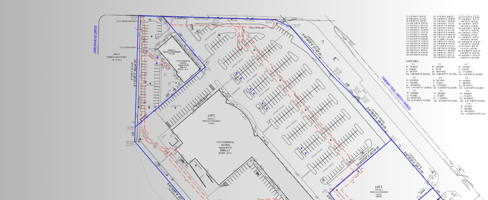

The ALTA/NSPS Land Title Survey is one of the most important tools in the title industry toolbox,...
10 Survey Red Flags That Stall Closings (and How to Prevent Them)
When the closing takes longer than anticipated, you usually can point to a few survey issues that cause most of the last-minute delays, rework, and policy questions. Here's a list, based on field experience, to help you identify issues and keep your files moving. (Bonus: use this list to train your team to standardize intake.)
1) Encroachments hiding in plain sight
Some of the smallest encroachments can be the biggest headache, especially ones created later in the process. Common culprits include fences, sheds, driveways, or patios. These usually create access disputes, corrective agreements, and/or a re-survey.
Prevent it: Order the right survey (Boundary for most resi, ALTA for lender/commercial), and get boundary staking if you will build a fence or do other work near it.
2) Missing or disturbed corner monuments
Without the corners, the "best guesses" of construction and its timeline are subject to change.
Prevent it: Request monument set/restore or staking with your order. Advise us of when you want work done so we may prioritize key corners.
3) Setback violations
Additions, sheds, driveways, and other structures may encroach too closely on property boundaries.
Prevent it: Create local setback requirements (or find out if one exists). Topo may be needed with design/permitting.
4) Access conflicts
Shared drives, unrecorded access, or gates without codes lead to site delays and title exceptions.
Prevent it: Share gate codes and site contacts, confirm easements grant shared access, or at least flag the possibility.
5) Utility and drainage easements
Easements can limit where improvements like pools or additions go.
Prevent it: Identify the survey type needed (ALTA for maximum detail), and if you have existing surveys/plans, provide these to the surveyor.
6) Flood/Elevation gaps
Insurers and communities may require Elevation Certificates; missing data may spoil closing packages.
Prevent it: An EC is required when the property is flood-prone. Early ECs avoid underwriting delays.
7) Multi-parcel mismatches
Split/combination errors and legal description discrepancies generate deed corrections and rework complications.
Prevent it: Send the legal, parcel IDs (folio/APN), and any plat info previously recorded. Also, confirm that the correct jurisdiction(s) have been selected.
8) Legal description gaps/overlaps
Historic gaps or overlaps crop up in chains of title.
Prevent it: Provide the required commitment and, if known, the prior legal description. A survey (usually an ALTA) often reveals problems before closing.
9) Unpermitted/unrecorded improvements
Patios, fences, or sheds may not appear in property records.
Prevent it: Use inspection/MLS notes on unpermitted work, note visible deficiencies in the survey, and escalate the title if necessary.
10) Incomplete jurisdiction/HOA details
Wrong HOA, wrong portal, or wrong municipality = the request is stalled and time is wasted.
To prevent this, give the HOA name/portal link, manager contact info, and the correct municipal/utility combination as part of the order.
The fast path: order the right scope the first time
- Boundary vs. ALTA/NSPS: If a lender requires ALTA—or if there are complex easements/multiple parcels—don’t start with a Boundary.
- Add Topo for design/permits: Drainage, grading, and engineering decisions rely on contours and spot elevations.
- Add an Elevation Certificate when flood or insurance questions pop up.
- Request staking/monuments when fencing or construction is planned.
What to include with your order (to save days, not minutes)
- Property details: Street address (city, state, ZIP) and county parcel ID (folio/APN).
- Service requested: Mortgage Location Survey, Boundary Survey, ALTA/NSPS Survey, or FEMA Elevation Certificate.
- Timing: Target “needed by”/closing date; note if it’s a rush.
- Your contact: Requester name, company, email, phone.
- Access & notes (as applicable): Gate codes, on-site contact, HOA/COA name or portal link, municipal details, special instructions (e.g., staking, prior issues).
- Helpful uploads (if available): Prior surveys, title commitment/legal description, site/plot/house plans.
In Summary
The most common causes of delays are encroachments, missing corners, setback/access/easement conflicts, missing flood data, parcel/legal mismatch, unpermitted construction, and incomplete HOA/municipal information. These can be reduced by selecting the appropriate survey scope (Boundary vs. ALTA) and adding Topo/EC if needed. Necessary intake information, boundary stakes and monuments, and other inputs are provided before construction. A checklist guides teams to ensure that everyone is aligned and on time.